

An urgent measure, which is part of a report already marked, for the minister in charge of the issue, by a succession of spectacular announcements that are never followed up.
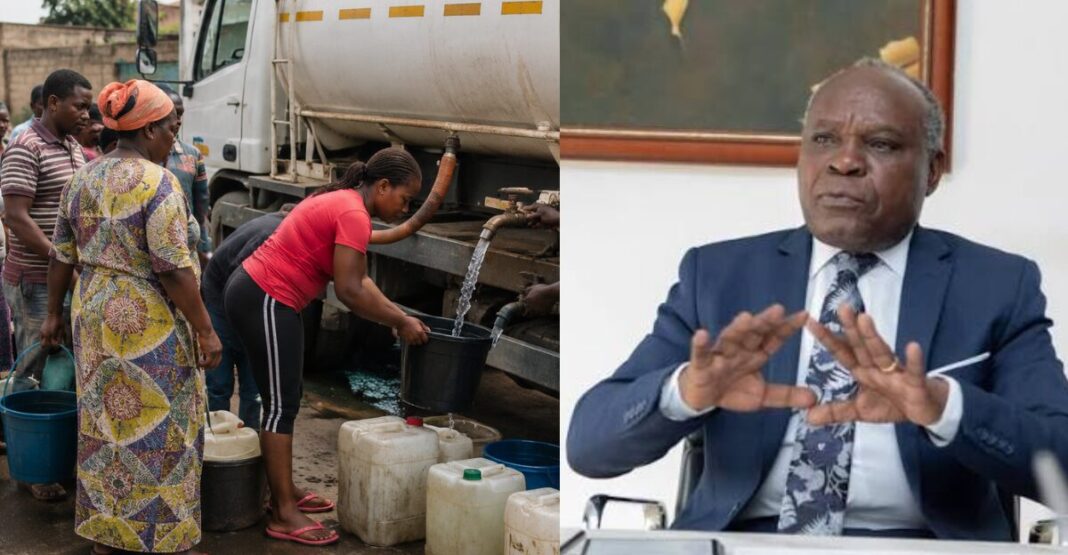
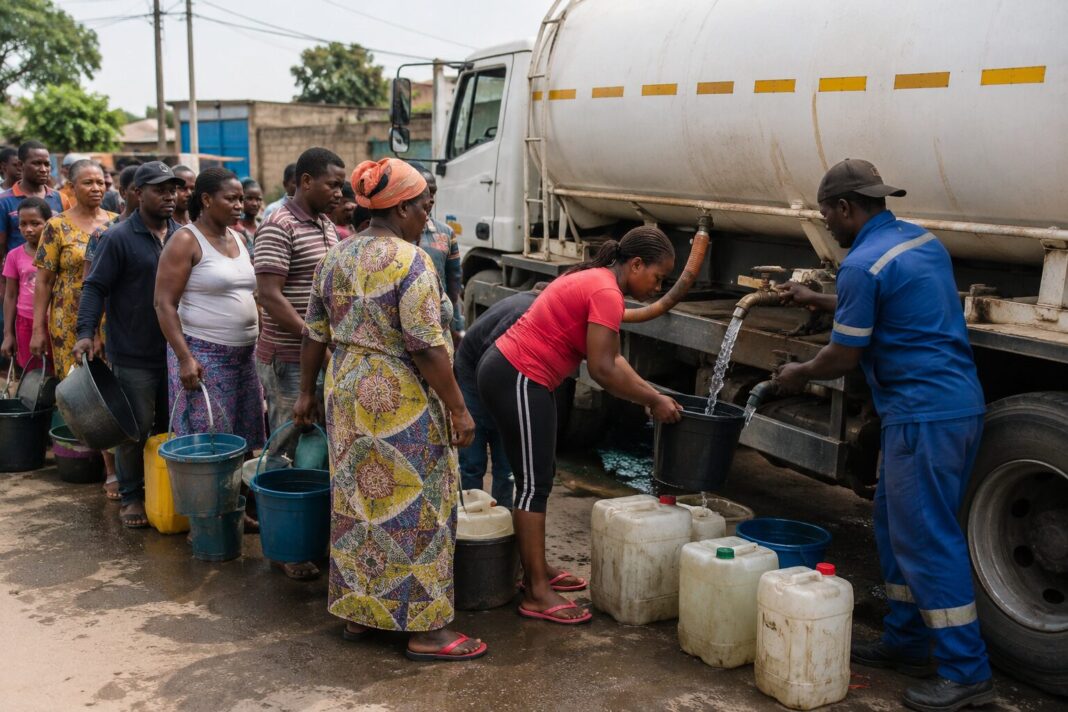
The measure essentially responds to a widely shared sense of indignation : that of access to drinking water, which is in high demand and has become a subject of speculation. The official statement sets out the facts : subcontracting, an illegal trade network, reselling water at up to 20,000 francs per cubic metre where the government has now set a price cap of 3,000 francs. “For far too long, the lack of water has become a source of profit for some,” says one internet user.
On paper, the emergency operation is launched : 55 lorries stopped, the deployment of the fire service, the Republican Guard and military engineers, and a single freephone number (18) to help with the order process in and around Libreville.
On further examination, however, the operation reveals a limitation that is by no means new under the current minister’s leadership. On 6 March, the Ministry of Universal Access to Water and Energy published a list of some 2,600 SEEG customers who had failed to pay their electricity bills, sixteen pages of names in the daily newspaper *L’Union*. The action, which was intended to be remarkable, had an almost negative effect : many names appeared in an incomplete form, a first name followed by an initial which created confusion rather than the transparency expected.
This announcement seems to reflect exactly the same kind of communication problem that is affecting the water crisis : the desire to take decisive action is understandable, but it is being implemented before a feasibility study has been carried out, a situation that is causing daily difficulties for people. The system could break down before it has even become operational. And on social media, where access is already restricted, reactions have been one of general incomprehension : “Before introducing a new system, it would have been advisable to sit down with the SEEG to draw up a proper map of the power supply. Not all neighbourhoods ar e supplied in the same way,” points out one user.
Others, by contrast, welcome a decision that ‘is a step in the right direction’ and believe that the chaotic start to an emergency operation should not overshadow the intended objective, as long as the government rapidly increases the number of call lines and delivery capacity.
The country hosts one of the longest rivers in Central Africa, the Ogooué, measuring 1,200 kilometres; this paradox, which deserves to be highlighted, reflects decades of underinvestment in distribution networks.